Electric bikes, also known as e-bikes are like traditional bicycles, but they have a battery-powered motor.
Electric bikes can help riders climb hills easier, ride at faster speeds, transport cargo and other essentials, or ride further distances without tiring quickly due to pedal assist and throttle features. E-bikes are relaxing and fun to ride! Their powerful motors propel you faster and further than traditional bikes. You can choose between Class III models that go up to 28 mph on pedal assist, plus 20 mph throttle, or Class II models that go up to 20 mph on both pedal assist and throttle.
E-Bike Classes, Explained
Classes of Electric bike are regulatory designations that help riders determine where and how they can use their e-bikes. Different classes typically have different restrictions when it comes to using bike lanes, bike-only paths, certain mountain bike trails, other off-road terrains, and more.
So let’s learn about how your electric motor, pedal assistance, throttle, and maximum speed all contribute to your e-bike’s class, and how to customize and change classes to best suit the way you ride.
In the articles below, we’ll explore the history of e-bikes and define the e-bike classification system: what are each e-bike’s class, and how do they differ? Once you understand this, we will be able to help you choose the right e-bike class for your riding style.
Federal Electric Bike Classification And Regulations
In 2002, Congress enacted HB 727 to amend the federal definition of electric bikes. It classified low-speed electric bicycles as:
“A two- or three-wheeled vehicle with fully operable pedals and an electric motor of less than 750 watts (1 hp), whose maximum speed on a paved level surface, when powered solely by such a motor while ridden by an operator who weighs 170 pounds, is less than 20 mph.”
A few things to note here:
1. “When powered solely by such a motor” is a key piece of the puzzle.
This means the use of a throttle-only approach (where the motor power is the only energy- the rider doesn’t pedal) is capped at 20 mph. Any e-bikes with a top speed of 28 mph achieve that with a pedal-assistance system! Those are Class 3 e-bikes, which we’ll get into later.
2. Ridden by an operator who weighs 170 pounds?
This just means that the e-bike may go slower or faster than that if the rider is heavier or lighter than 170 pounds. No, e-bike users do not have to be exactly 170 pounds!
Beyond the federal level, 44 states plus the District of Columbia have their own e-bike regulations, including many county and city laws enforced by local authorities. Most of these incorporate the class system when determining which e-bikes (if any) are allowed on certain types of roads and trails.
The three main classes of electric bikes mostly have to do with your e-bike electrical system — how your motor, pedal assist system (PAS), and throttle (if your e-bike has one) work together to power your e-bike.
Any e-bike model can become any class with modifications — in fact, all custom-ordered Emojo e-bikes can be configured to any class you like! It’s all about the features you choose.
Keep in mind that different classes come with different regulations.
Learn your local e-bike regulations to ensure you’re riding safely. Pictured: EMOJO Bull 8.5″ Low Step Through Electric Tricycle
Class 1 e-bikes have a maximum assisted speed of 20 miles per hour. You can go faster than 20 mph, but the bike won’t provide any motor assistance beyond that speed.
These bikes use pedal assistance only. They can’t have a throttle.
Pedal Assistance: Yes
Throttle: No
Max Assisted Speed: 20 mph
Speedometer Required: No
Class 2 e-bikes have a maximum assisted speed of 20 miles per hour, just like Class 1. However, Class 2 electric bikes have a throttle and may also have a pedal assist system.
An e-bike with a throttle but no pedal assist system is typically considered a motorized vehicle. This usually means that a Class 2 e-bike is not permitted on bike trails or multi-use paths.
Pedal Assistance: Optional (may be throttle-only)
Throttle: Yes
Max Assisted Speed: 20 mph
Speedometer Required: No
Riders looking for high-speed electric bikes will love this class. These e-bikes can provide assisted speed of up to 28 miles per hour!
Class 3 e-bikes usually do not have throttles, and that’s reflected in most state definitions of a Class 3 e-bike.
While this higher speed restricts riders from using them on most bike paths, it can be an advantage for commuters following traffic flow in the streets.
Given their high speeds, Class 3 e-bikes are required to have a speedometer.
Pedal Assistance: Yes
Throttle: Optional (may be pedal-assist only)
Max Assisted Speed: 28 mph
Speedometer Required: Yes
Class 4 e-bikes are a relatively new addition. These e-bikes aren’t actually even considered e-bikes. They’re motor vehicles, like a moped. Class 4 e-bikes have nominal motor output above 750W and aren’t limited to any max speed. They may have any combination of throttle and pedal assist sytem.
Pedal Assistance: Optional (may be throttle-only)
Throttle: Optional (may be pedal-assist only)
Max Assisted Speed: No limit
Speedometer Required: Yes
Here’s a summary of the main differences.
Class 1
Class 2
Class 3
Class 4
Throttle
N
Y
Optional
Optional (may be PAS-only)
Pedal Assist System (PAS)
Y
Optional
Y
Optional (may be throttle-only)
Max Motor Nominal Output
750W
750W
750W
No limit
Max Assisted Speed
20 mph
28 mph
28 mph
Over 28 mph
Typical Regulation Level
(varies by location)
Low or None
Medium
High
Highest
How Do I Know Which Class My E-Bike Is In?
Not all e-bikes can move between classes. Many manufactured e-bikes come with a label designating their default class, and some states require e-bikes to be manufactured or sold with a label designating their class.
If your e-bike doesn’t have a sticker or label designating its class, check for 2 things:
Does your e-bike have a throttle? If so, it’s most likely Class 2, but it may be 3 or even 4. So, next…
Check the settings on your e-bike’s display. What maximum speed does your e-bike allow?
If 20 mph, it’s Class 1 without a throttle or Class 2 with a throttle.
If 28 mph, it’s Class 2 with a throttle or Class 3 if there isn’t a throttle.
If higher than 28 mph, it’s Class 4 or not classified as an e-bike.
Who you are and the way you like to ride may give you some clues as to which of the three classes is your perfect match.
Depending on your location, riders under 16 are often prohibited from operating Class 3 e-bikes. In some cases, young riders are prohibited from operating e-bikes at all!
So if you’re a teenager or parent of a teen, be sure to carefully review all your local legislation and restrictions when buying your e-bike.
If you mostly ride for fun on flat, paved roads or bike trails, a Class 1 e-bike is perfect for you. As long as having pedal assist above 20 mph or using a throttle isn’t at the top of your wish list, you’ll love the freedom of riding your Class 1 e-bike in most of the same places that a regular bike is typically allowed, including multi-use trails.
When it comes to riding in the road with the flow of traffic, you usually won’t face restrictions on an e-bike — just avoid high-speed roads where e-bikes can’t keep up!
However, some cities, counties, and states only allow regular bikes and traditional cyclists to use bike lanes and multi-use paths. Class 1 e-bikes are most commonly allowed, and so are Class 2 in many places; just be careful with Class 3 if that’s where you plan to ride.
E-bikes are typically permitted in street bike lanes — but always check your local e-bike regulations to be sure.
You may benefit from higher assisted speeds or a throttle if you crave long-distance rides. These features can provide relief during your travels without compromising your progress. Consider a Class 2 or Class 3 e-bike for amazing long-distance rides.
Class 3 e-bikes face heavy restrictions in state parks across the country. Class 2 e-bikes aren’t far behind due to their throttles. And when it comes to national parks, e-bikes of any class are considered motorized vehicles — which means they aren’t allowed on pathways meant for mountain bikes and other regular bikes.
Your best bet for a trail-ready e-bike is a Class 1. We hope to see restrictions easing up in the coming years.
E-Bike vs. Regular Bike: What Are The Differences?
At a glance, many regular bikes and e-bikes appear practically identical to one another. Frames, wheels, tires, pedals, saddles, stems, handlebars, and even brakes can all look pretty much the same.
But the unique parts — the ones that make the e-bike riding experience so much fun — do look different from what you’d find on a typical bike. Learning to recognize these parts can help you tell e-bikes and regular bikes apart when you’re out and about. And you can better understand your electric bike’s electrical system by learning about them, too.
Let’s see what each of these parts looks like and what role they play in your e-bike’s functions:
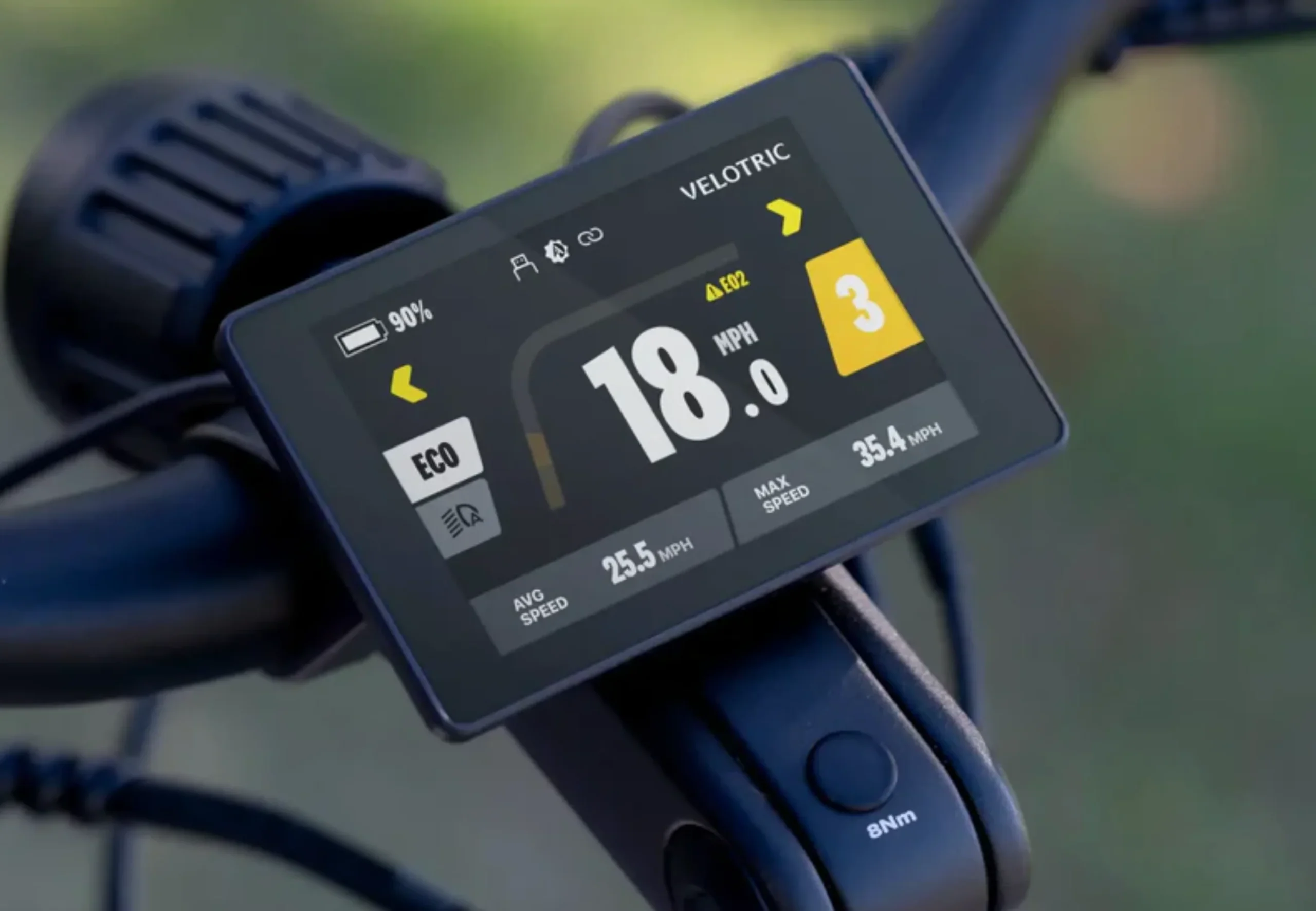
Although they’re generally small in size, display screens are one of the most noticeable differences between a regular bike and an e-bike.
But not all e-bikes come with displays! Some are designed to work with apps on your phone instead — with varying success.
All Magnum Bikes feature premium backlit LCD display screens.
Some of the main functions of a display include:
Engaging and adjusting the levels of your pedal assist system (PAS)
Tracking distance, speed, wattage, and battery life
Turning your front and rear lights on and off
Changing unit settings (imperial vs. metric)
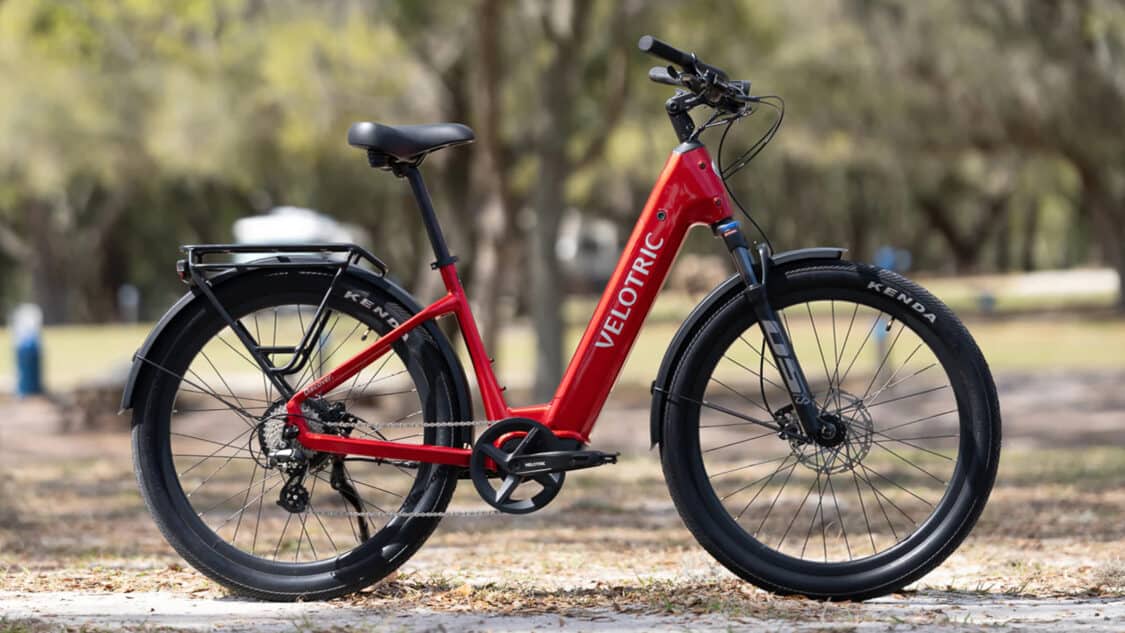
Power on the display and take a ride on the Velotric Discover.
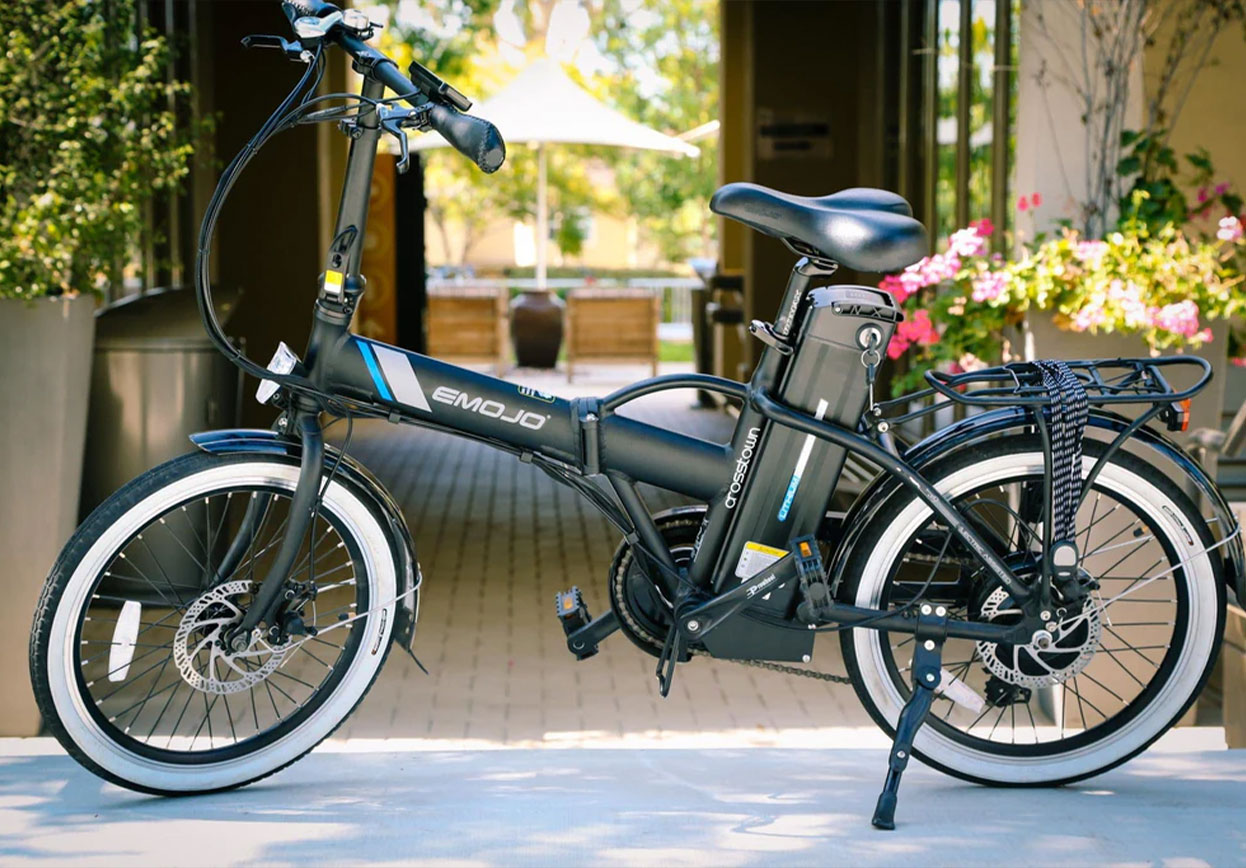
Batteries on an e-bike may be either integrated (permanently built into the frame) or external (removable).
Once you learn to recognize what an external battery looks like, it can be an easy way to differentiate a regular bike from an e-bike at a glance.
But “external” placement doesn’t always mean the battery is visually obvious, juts out from the frame, or detracts from the design. Instead, it just refers to the fact that the rider can remove their battery from the e-bike frame for charging, transit, or storage.
Conversely, integrated batteries can’t be removed from the frame for transit or storage. And when it’s time to charge your battery, you can’t remove it; you basically need to plug in the whole bike.
Rear-hub motors and front motors are pretty inconspicuous and tend to blend in with derailleurs on many e-bikes.
But mid-drive motors usually feature a distinctive large casing that adds some visual heft to the crankset (the area where the pedals connect to the bike chain). That makes this motor design the most visually obvious. Whether that’s desirable or not just depends on your opinion!
Beyond the looks, some riders feel the central, low-to-the-ground placement of the mid-drive motor better contributes to their center of gravity while riding. Mid-drive motors also tend to be lighter in weight overall.
However, hub motors are less expensive to produce; those savings are passed on to the consumer in retail pricing. What’s more, when it comes to maintenance and repairs, hub motors are also cheaper to maintain and simpler to access (particularly for DIY maintenance).
And while all mid-drive motors are primed to work with your e-bike’s gear system, which can help you take advantage of extended range on your rides, some rear-hub motors also offer geared integration with your chain.
As of this article’s publishing, all Magnum Bikes feature rear hub motors — some direct-drive (meaning they turn the wheel itself, bypassing the gears) and some geared (meaning they turn your chain/crankset and work with your bike’s gears).
Physically, the controller is a very small piece of the e-bike. Depending on the design of your e-bike, you can’t even really see it when the bike is fully assembled. You may have to look at your e-bike manual to locate it!
But without a controller, you might as well be riding a regular bike. The battery, motor, and display screen can’t do much without it!
That’s because the controller is like the brain of your e-bike.
Signals sent from your PAS or throttle need to reach your battery and then your motor in order to deliver the boost you asked for. But the battery and motor on their own aren’t smart enough to decide how much energy to give based on your inputs.
The controller has to interpret the signals from your PAS or throttle to decide how much energy you’ve asked for. Then it passes that decision along to the battery, which powers the motor appropriately to get you going faster.
So the next time you spot an e-bike, you’ll know that its exhilarating speed isn’t possible without its small but mighty controller!
Is It Better To Buy An E-Bike Or Regular Bike?
An e-bike’s display, battery, motor, and controller all work together to form this essential difference:
A regular bike can only power ahead with as much energy as you put into it. It can only go as far as you can. With a regular bike, it’s just you and the road.
But an e-bike can jump in when you’ve been riding for hours, when you’re hesitating at the bottom of a giant hill, and when you want to push through for a just few more miles. It can be the reason you get outside more, keep up on rides with friends and family, and hit your goals.
The choice between a regular bike and an e-bike is completely up to you. In our opinion, anything that gets you moving outside is a great choice!
But an e-bike can help you ride farther — especially when the going gets tough. We’d pick that option any day!
Sales of bikes- electric and conventional, have soared since the beginning of the COVID lockdown in March 2020 and compared to March 2021, sales of e-bikes are up nearly 200%! And the momentum has continued to climb. Those who now own e-bikes are realizing the many benefits of having a motor to back them up and, as we discussed previously, riding an e-0bike is not “cheating”.
With people navigating their new workscapes or returning to the workplace, whether part-time or full-time, some may be eyeing their new ebike and wondering if they should ditch their regular commute and join the increasing number of people cycling to work. We’re here to say that you definitely should, and to make it even easier for you we’ve created this guide for commuting by e-bike so you can be sure that you’re ready for anything! You’ll find a range of e-bike commuting tips that will help you avoid traffic, improve your level of fitness, and allow you to choose the appropriate gear according to the weather and other factors.
BE PREPARED FOR YOUR E-BIKE COMMUTE
Fail to prepare and prepare to fail is what they say, and you do need to think of a few more things when you’re cycling by e-bike. Preparing for your cycling commute is best done the evening before and once you’ve done it a few times it becomes second nature. Read on to learn the top tips for commuting by e-bike that will help you save time commuting and enhance your ride.
Put your e-bike battery on charge the night before to ensure that you have enough juice to get you to work. Many people make this part of their routine when they’re putting their e-bike away so they don’t have to even think about it.
When riding an e-bike you are outside and, unfortunately, the weatherman isn’t always right. Wear the right clothes for the season but pack many, thinner layers rather than a few bulky ones as this enables you to always be comfortable on your ride. Ensure that you pack a rain jacket because it’s never nice to be caught in the rain. Also, when you’re riding, make sure you’re not wearing pants which dangle. You run the risk of getting them caught in the chain; this can be dangerous and will ruin your choice pair of pants!
Pack your bag the night before with everything you need: layers, bike lock, water, repair kit, laptop, work items, etc. This leaves you less to think about in the morning. Ditch the backpack and find some cycle bags which work for you, there’re many configurations which you use to attach bags to your e-bike and you’re sure to find one that fits your work bag and your needs. When packing these bags make sure that you’re balancing the weight correctly.
Safety is a very important factor whenever you are cycling and the commute is no exception. Because this is also a time when there are more cars, bikes, and people on the roads and pavements safety should be at the top of your agenda. Luckily you can increase the safety on your next ride by following these simple e-bike commuter tips.
Always wear a helmet when riding a e-bike. Get one that fits snuggly on your head and you’ll have peace of mind.
Get lights for the front and back of your e-bike. When the days start to get shorter you’re sure to get surprised one suddenly dusky evening. Once you’ve purchased these lights fix them on to your e-bike, leave them there year round and you’ll never get caught out again.
Reflectors are not an alternative to lights and should be used in addition to them. The ones you can put in the spokes of your wheels are especially great as they’re visible to people who are seeing you side on, say, as you pass through intersections, and maybe can’t see your lights.
You should wear highly visible colors and, ideally, reflective clothing. This becomes even more apparent when the light starts to get low. Not all of your layers need to be this way but your top one should, and this means that your rain jacket should be too.
“On your left” is the conventional cyclist’s call that has taken over from the bell but with so many people wearing headphones on their commute you cannot be too sure that they’ve heard you. Getting yourself a bell gives you a method of rise unobtrusively above the noise in people’s ears, making them aware that you’re passing.
You can travel faster on an e-bike and this means that you need to brake sooner to safely slow yourself down. This will soon become second nature, but you also need to remember that when there’s water on the road you need to start braking even sooner because this water provides poor traction and increases your stopping distance.
The laws of the road are there for a reason and we wouldn’t break them in a car so why would we break them on an e-bike? Give e-bikers a good name and protect yourself and others around you by keeping to the rule of law. Remember that some trails don’t allow e-bikes, know before you go and give e-bikers a good name in the cycling community.
Not just a safety factor, fenders stop mud and water from splashing up onto your clothes and ruining your day just as it has started. They not only stop you from getting wet and muddy before getting to the office but they also stop you from being distracted by such things, and allow you to plough through puddles with confidence.
Having a cycling buddy not only makes it more fun but it will also increase your visibility. Your buddy doesn’t have to work with you they just need to leave from, and return to, the same area as you.
Remember that when you’re riding an e-bike it is more important to be aware of your surroundings because you can travel much faster than a regular cyclist and both cars and pedestrians will be caught unaware by your extra power and speed.
Now you’re safe and you’ve gotten everything ready you can get going on your commute. There are many different ways commuting by e-bike can be different from commuting by car or by public transport and here’re some e-bike commute tips to optimize your biking experience.
It sounds a little counter productive but you should be a little chilly when you step out of the house. As soon as you start riding you’ll start warming up and you won’t have to stop to remove layers, but, if you do need to, you can easily add one.
The beauty of commuting by e-bike is that you don’t have to travel down the busy main roads you may be used to. Not only is avoiding these safer and easier but it can make your cycling, and therefore your commute, more enjoyable too.
Because you’re on an e-bike you have more route options available to you. Map apps have a function which display various bike route options, and remember that your commute home usually doesn’t have the same time restrictions that the commute to work does; leaving you free to explore new routes at your leisure. Not only does all this make it more interesting but you might discover something you never knew was right on your doorstep.
As well as being a safety feature, to stop you reaching in your pocket or stopping to look at your route, getting yourself a handlebar mount for your phone means that you can change and monitor your route with confidence and ease.
These are two types of handlebars often associated with road or racing bikes. They can be great for commuters for many reasons, all related to a change in your posture. This change makes your ride more comfortable, ensures that you are get maximum power from your legs, and also makes you more aerodynamic, reducing drag and allowing you to travel faster.
Get a good, hefty lock to secure your e-bike once you get to your destination. A good, hefty lock can deter anyone from stealing your e-bike. If your workplace has a garage where you can park and lock your e-bike even better, and you can often leave your lock attached to wherever you lock it so that you don’t have to lug around a heavy chain. It is also a good idea to take your battery off and into the office with you, this way you can make sure it’s fully charged for your ride home.
There are many ways to make your commute more comfortable and, as you progress you may find yourself opting for a different seat, wider handlebars or all manner of accessories to enhance your riding experience.
When starting to commute by e-bike, one of the best e-bike commuting tips is not to jump into it with two feet. Ease yourself in with a day or two a week and work up to doing it everyday. Not only will your legs thank you but you’ll gain more confidence doing it this way. Remember that your commuter e-bike doesn’t just have to be used for commuting and on the weekends, or after work, you can also use it to head out to meet friends or just go for a leisurely, scenic cycle.
E-bikes give you the confidence to get to work without being tired, and with proper planning and preparedness you can save yourself time, money, and stay safe; all while looking after the environment. These simple and easy-to-implement e-bike commuting tips will help you stay safe and secure no matter where your ride takes you.
Manage Consent
To provide the best experiences, we use technologies like cookies to store and/or access device information. Consenting to these technologies will allow us to process data such as browsing behavior or unique IDs on this site. Not consenting or withdrawing consent, may adversely affect certain features and functions.
Functional
Always active
The technical storage or access is strictly necessary for the legitimate purpose of enabling the use of a specific service explicitly requested by the subscriber or user, or for the sole purpose of carrying out the transmission of a communication over an electronic communications network.
Preferences
The technical storage or access is necessary for the legitimate purpose of storing preferences that are not requested by the subscriber or user.
Statistics
The technical storage or access that is used exclusively for statistical purposes.The technical storage or access that is used exclusively for anonymous statistical purposes. Without a subpoena, voluntary compliance on the part of your Internet Service Provider, or additional records from a third party, information stored or retrieved for this purpose alone cannot usually be used to identify you.
Marketing
The technical storage or access is required to create user profiles to send advertising, or to track the user on a website or across several websites for similar marketing purposes.

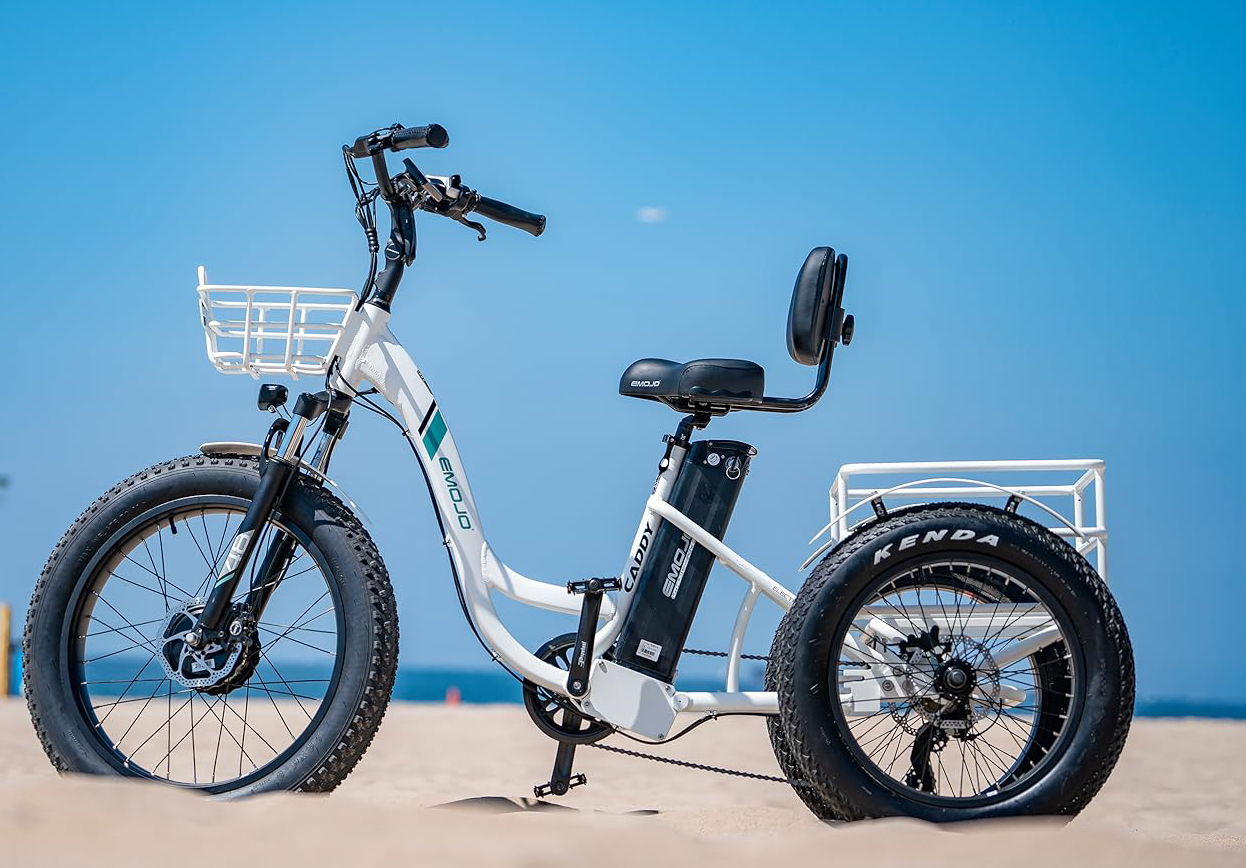 Learn your local e-bike regulations to ensure you’re riding safely. Pictured: EMOJO Bull 8.5″ Low Step Through Electric Tricycle
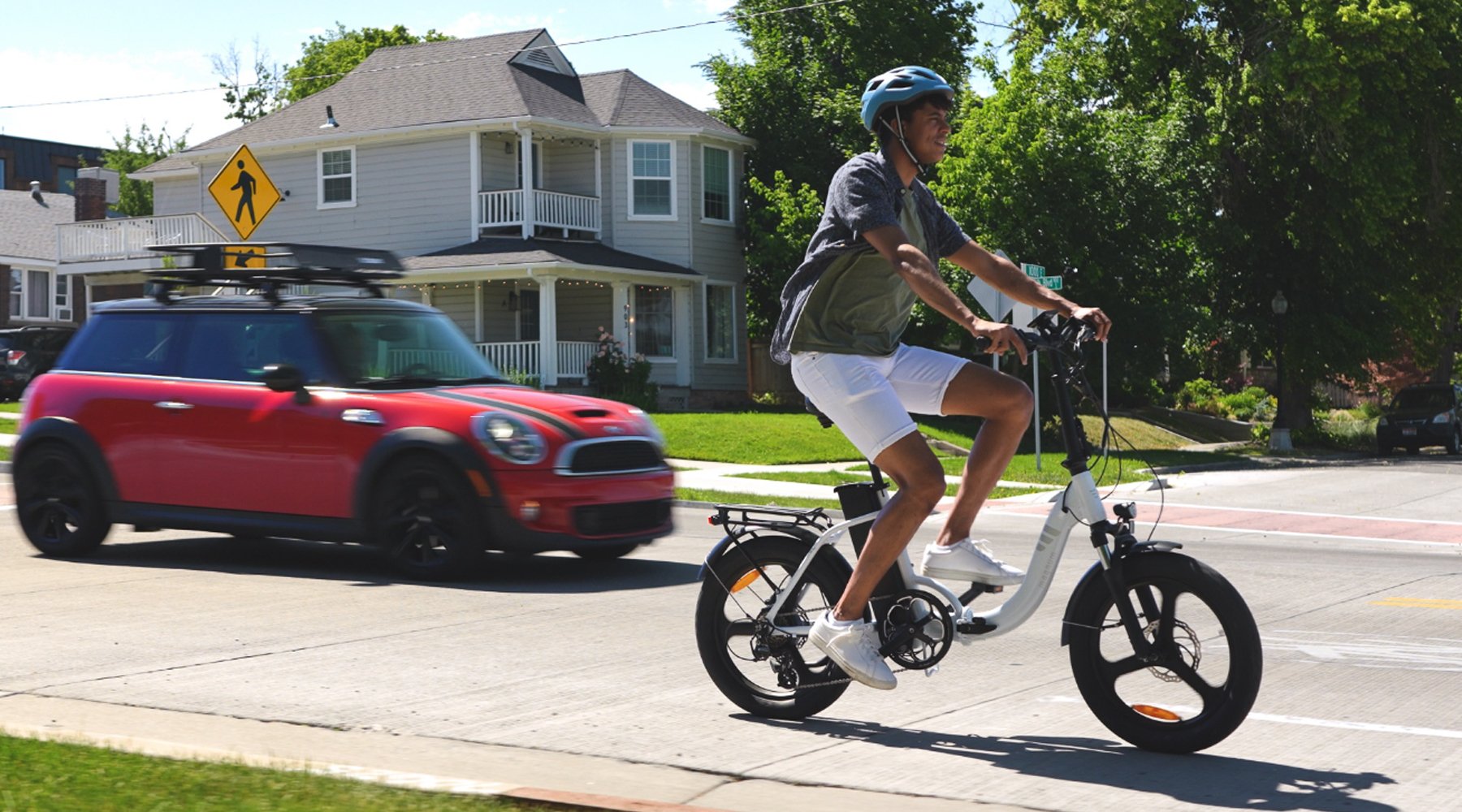 E-bikes are typically permitted in street bike lanes — but always check your local e-bike regulations to be sure.